

Fundamentale Ideen der Informatik
Codierung

Inhalt
- Wiederholung
- Was ist Codierung?
- Zahlensysteme
- Binärsystem
- Hexadezimalsystem
- Zeichencodierung
- ASCII
- Unicode / UTF-8
- Codierung als fundamentale Idee
Wiederholung
Aus der letzten Sitzung: Merkmale eines Computers
- Zwei alternative Zustände zur Darstellung von Daten
- Elektronik statt Mechanik
- Das gespeicherte Programm

Quelle: bpb.de
Was ist Codierung?
Codierung = Zuordnung von Zeichen eines Zeichenvorrats zu Zeichen eines anderen nach einer festgelegten Vorschrift.
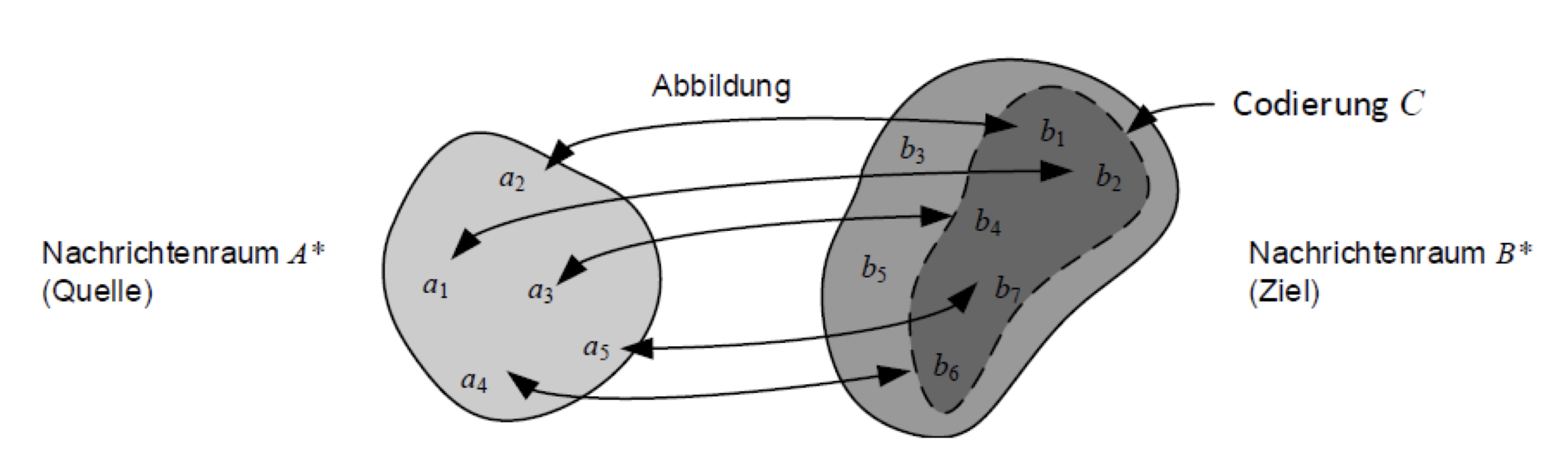
Analogie: menschliche Kommunikation
💭 A* — Gedanken
Alles was ein Mensch meinen oder fühlen kann
🗣️ Codierung = Sprache
Nur vereinbarte Wörter & Gesten sind gültige Codewörter
🔇 b3, b5 = Rauschen
Unbekannte Worte, Missverständnisse — kein gültiges Codewort
Wo gibt es Codierung?
Quelle: stadt.muenchen.de
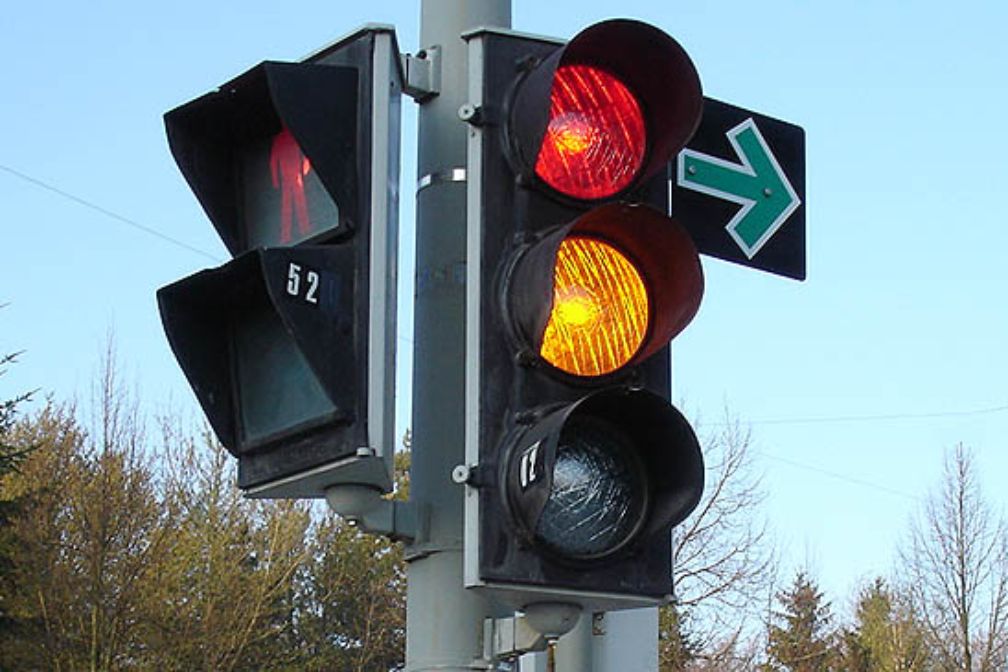
Drei Codierungen auf einem Bild:
🚶 Fußgängerampel
● Rot = Stehen | ● Grün = Gehen
2 Zustände → 2 Farben
🚗 Autoampel
● Rot | ● Gelb | ● Grün
3 Zustände → 3 Farben
↰ Grüner Abbiegepfeil
Eigenes Schild: Rechtsabbiegen trotz roter Ampel erlaubt
Zusatzinformation → eigenes Symbol
Noten — Codierung von Musik
Alle meine Entchen — abcjs (MIT)
Jedes Symbol = codierter Ton:
- Position auf Notenlinien
Tonhöhe (C, D, E …) - Form des Notenkopfs
Dauer (Viertel, Halbe, Ganze) - Notenschlüssel
Referenzpunkt für alle Positionen
Bilder — Codierung von Fotos

© Stefan Leitner / hohenlohe.de
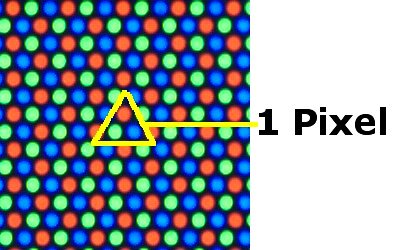
Auflösung & Pixel
- Dieses Foto: 1920 × 1276 Pixel = 2,4 Megapixel
- Jeder Pixel = 1 Punkt mit einer Farbe
- Farbe = 3 Werte: Rot Grün Blau — je 0–255
- Beispiel:
255 / 87 / 51= Orange
Bildschirmpixel unter Mikroskop — elmar-baumann.de
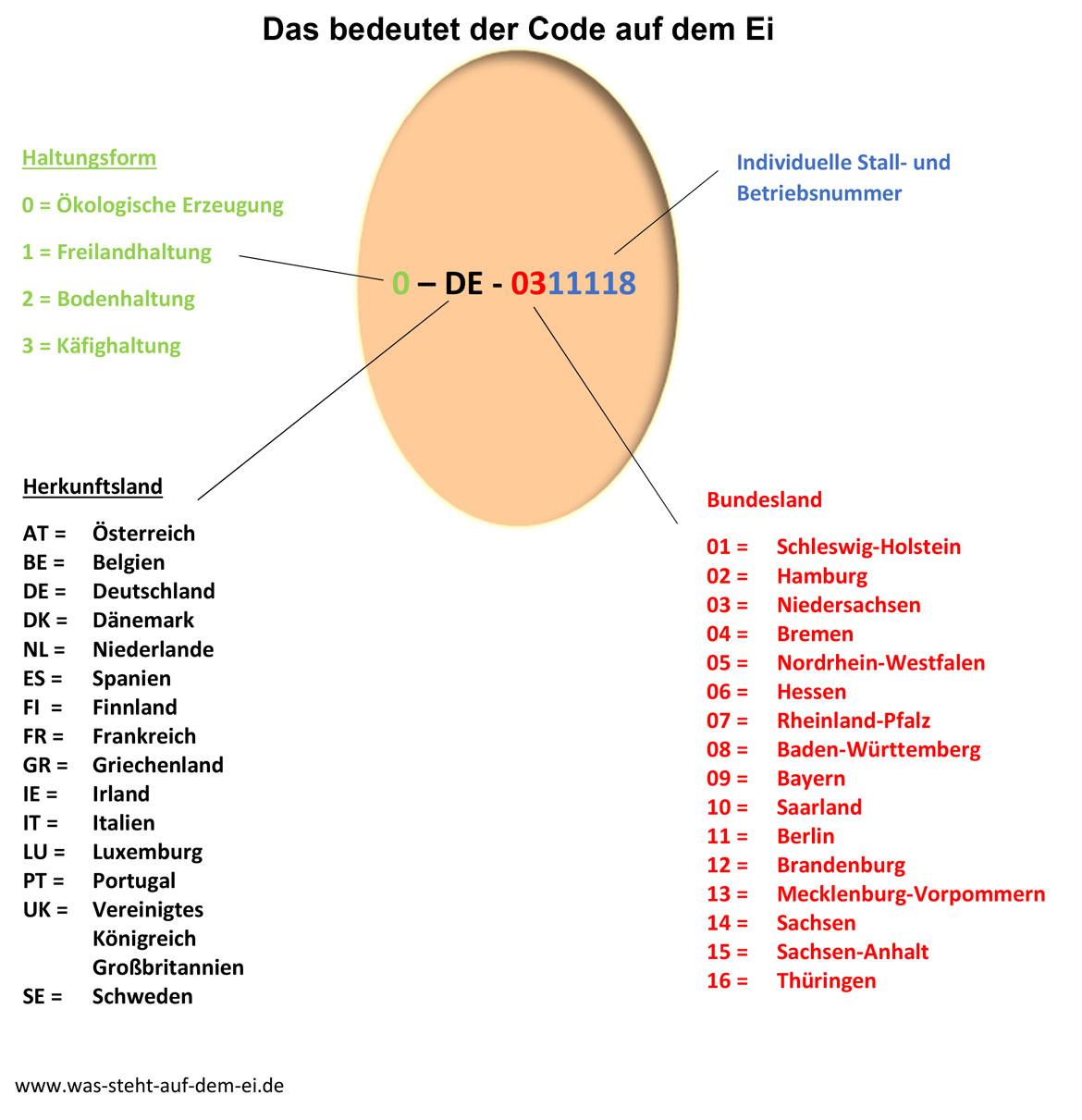
Codierung im Alltag — Code auf dem Ei
Quelle: verbraucherzentrale-niedersachsen.de
QR-Code — Codierung von Links & Text
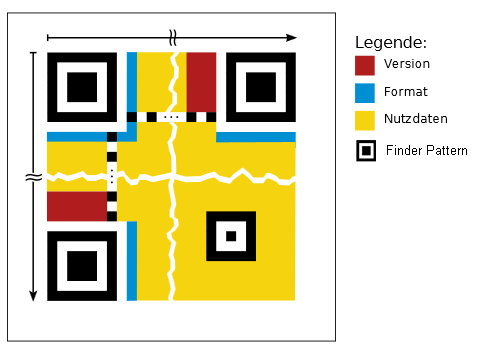
Aufbau eines QR-Codes

ph-weingarten.de
Warum Codierung?
- Computer kennen nur zwei Zustände: Strom an oder Strom aus
- Das entspricht: 1 oder 0
- Alles — Zahlen, Buchstaben, Bilder, Töne — muss in dieses Format umgewandelt werden
- Diese Umwandlung nach einer vereinbarten Regel ist Codierung

Quelle: stadtwerke-solingen.de
Stellenwertsysteme
Zahlen werden durch Stellen dargestellt — jede Stelle hat einen Wert.
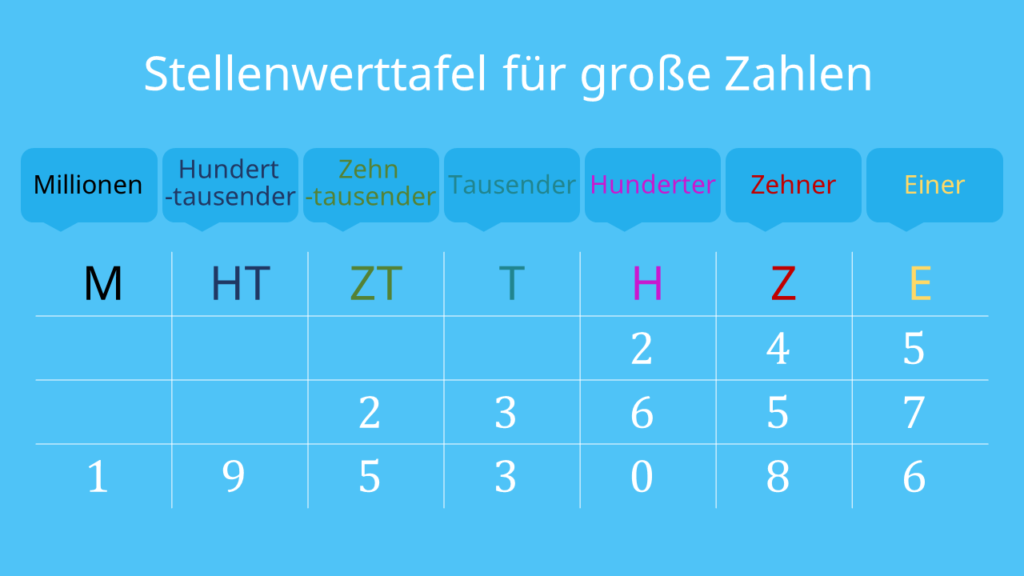
Quelle: studyflix.de
Im Dezimalsystem zählen wir mit 10 Ziffern (0–9) — im Binärsystem nur mit 2 Ziffern (0 und 1).
Das Dezimalsystem — Basis 10
Jede Stelle ist eine Potenz von 10:
| 10³ | 10² | 10¹ | 10⁰ |
|---|---|---|---|
| 1000 | 100 | 10 | 1 |
| 3 | 7 | 4 | 2 |
Ziffern: 0 1 2 3 4 5 6 7 8 9 — danach beginnt eine neue Stelle
Das Binärsystem — Basis 2
Dasselbe Prinzip — aber nur 2 Ziffern: 0 und 1
| 2⁷ | 2⁶ | 2⁵ | 2⁴ | 2³ | 2² | 2¹ | 2⁰ |
|---|---|---|---|---|---|---|---|
| 128 | 64 | 32 | 16 | 8 | 4 | 2 | 1 |
Ziffern: nur 0 oder 1 — danach beginnt eine neue Stelle
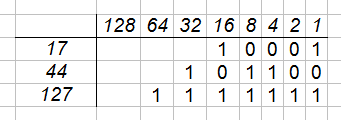
Quelle: studienkreis.de
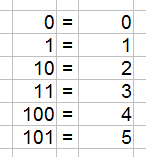
Binär → Dezimal lesen
Welche Stellen sind gesetzt (= 1)? Deren Werte addieren.
| 2⁵ | 2⁴ | 2³ | 2² | 2¹ | 2⁰ |
|---|---|---|---|---|---|
| 32 | 16 | 8 | 4 | 2 | 1 |
| 1 | 0 | 1 | 1 | 0 | 0 |
Quelle: studienkreis.de
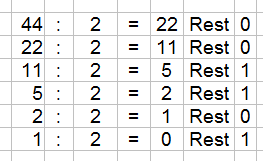
Dezimal → Binär umrechnen
Methode: Wiederholt durch 2 teilen — Reste von unten nach oben lesen
| Division | Ergebnis | Rest |
|---|---|---|
| 44 ÷ 2 | 22 | 0 |
| 22 ÷ 2 | 11 | 0 |
| 11 ÷ 2 | 5 | 1 |
| 5 ÷ 2 | 2 | 1 |
| 2 ÷ 2 | 1 | 0 |
| 1 ÷ 2 | 0 | 1 |
Quelle: studienkreis.de
Bit und Byte
1 Bit
Kleinste Informationseinheit
Wert: 0 oder 1
1 Byte = 8 Bit
2⁸ = 256 mögliche Werte (0–255)
z.B. ein ASCII-Zeichen oder ein RGB-Kanal
Größenordnungen:
Ein Foto mit 12 Megapixel × 3 Farbkanäle × 1 Byte = ~36 MB unkomprimiert
Hexadezimalsystem
Basis 16 — Ziffern: 0–9 und A–F
| Dezimal | Binär | Hex |
|---|---|---|
| 0 | 0000 | 0 |
| 9 | 1001 | 9 |
| 10 | 1010 | A |
| 15 | 1111 | F |
| 255 | 1111 1111 | FF |
Anwendung: Farben im Web — #FF5733 = R:255, G:87, B:51
ASCII – Zeichencodierung
American Standard Code for Information Interchange (1963)
- 7 Bit → 128 Zeichen
- Steuerzeichen (0–31)
- Druckbare Zeichen (32–127)
'A'= 65 = 0100 0001₂'a'= 97 = 0110 0001₂' '= 32 (Leerzeichen)
Problem: Keine Umlaute (ä, ö, ü), keine Sonderzeichen anderer Sprachen
ord('A') # → 65
chr(65) # → 'A'
bin(65) # → '0b1000001'
Unicode & UTF-8
Unicode
- Standard seit 1991
- Über 149.000 Zeichen
- Alle Sprachen der Welt
- Emojis 😀 🌍 ✓
UTF-8
- Häufigste Kodierung für Unicode
- 1–4 Bytes pro Zeichen
- Rückwärtskompatibel zu ASCII
- 98% aller Webseiten (2024)
'ä' → U+00E4 → 2 Bytes: 11000011 10100100
'😀' → U+1F600 → 4 Bytes: 11110000 10011111 10011000 10000000
Warum ist Codierung notwendig?
Wir möchten die reale Welt digital nutzen:
- 📷 Bilder & Videos
- 📝 Texte & Sprache
- 🎵 Musik & Töne
- 📊 Messwerte & Sensordaten
Aber: Ein Computer kennt nur 0 und 1.
Codierung ist die Brücke zwischen unserer Welt und der digitalen Verarbeitung.

© Sergey Nivens / computerwissen.de
Ist Codierung eine fundamentale Idee?
Überprüfung anhand der vier Kriterien (Schwill, 1993):
Horizontalkriterium
Codierung findet sich in Zahlen, Text, Bild, Ton, QR-Codes, DNA, Brailleschrift …
Vertikalkriterium
Von der Grundschule (Geheimschriften) bis zur Informatik-Forschung (Kryptographie)
Zeitkriterium
Seit der Antike (Hieroglyphen, Morse) bis heute — bleibt relevant
Sinnkriterium
Stellvertretung & Darstellung — im Alltag verankert (Ampel, Noten, Ziffern)
Praktische Übungen fürs Verstehen:
📄 Studi QR Codes | 🎮 Anton App
Fragen?
Sitzungsreflexion
franke-lab.de/lehre/sose/fundidee/reflexion.html?sitzung=3
Artefakte & Reflexion verfassen → HTML kopieren → in Mahara einfügen
To Do's:
- e-Portfolio aktualisieren (Reflexion Sitzung 3)
- Übungsaufgabe fertigstellen