

Fundamentale Ideen der Informatik
Datenkompression

Übersicht
- Verlustfreie Kompression
- Codes mit variabler Wortlänge
- Lauflängen-Codierung
- Differenzcodierung
- LZW-Algorithmus
- Verlustbehaftete Kompression (Datenreduktion)
Datenkompression – warum?
-
Daten sollen möglichst effizient gespeichert und übertragen werden:
- Datenmenge möglichst gering halten
- Übermittlungszeit reduzieren
- Speicherplatz sparen
-
Beispiel: Tar o. Zip zur Kompression von Dateien
Allgemeiner Ablauf
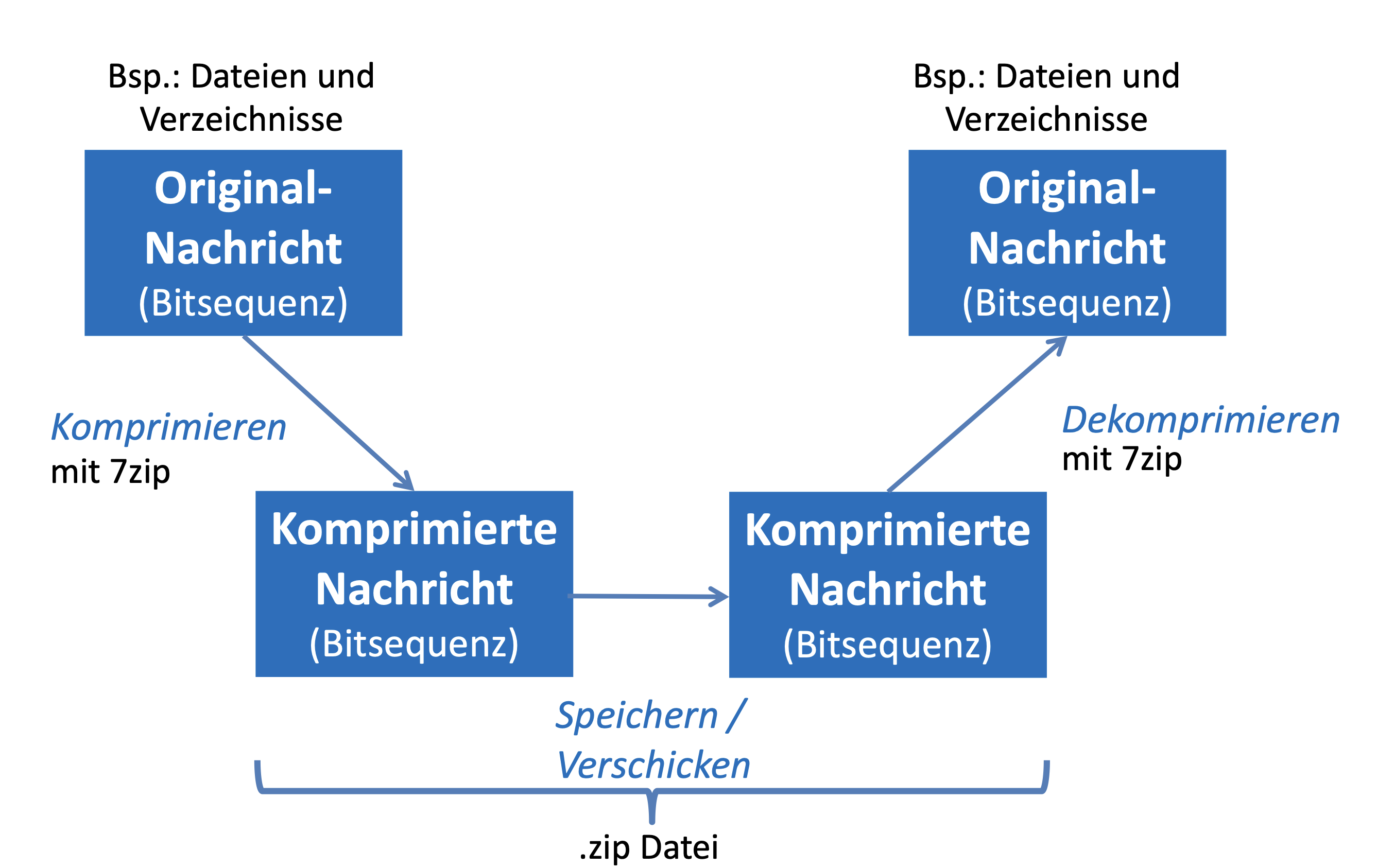
Umgang mit komprimierten Daten
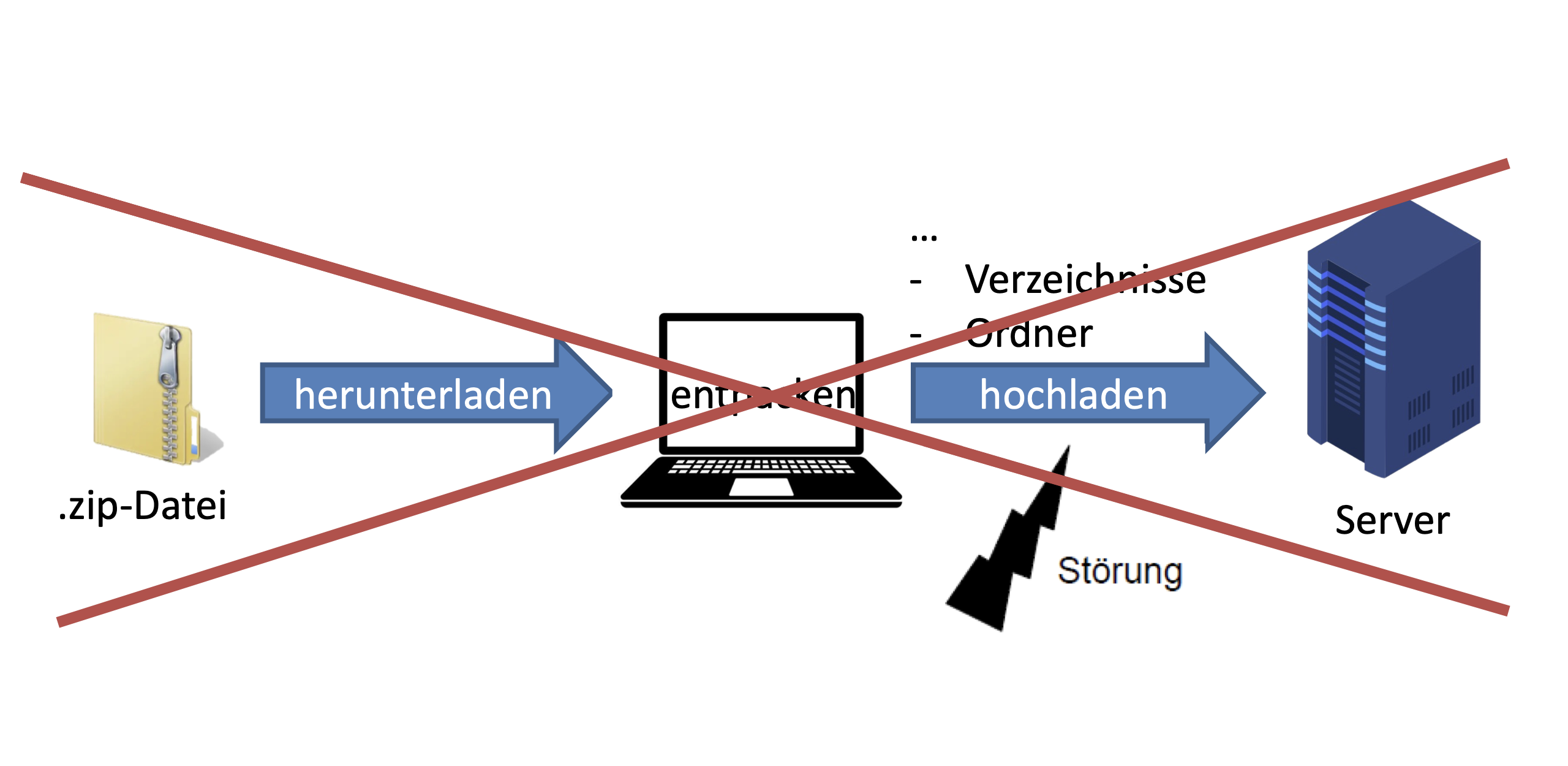
Umgang mit komprimierten Daten
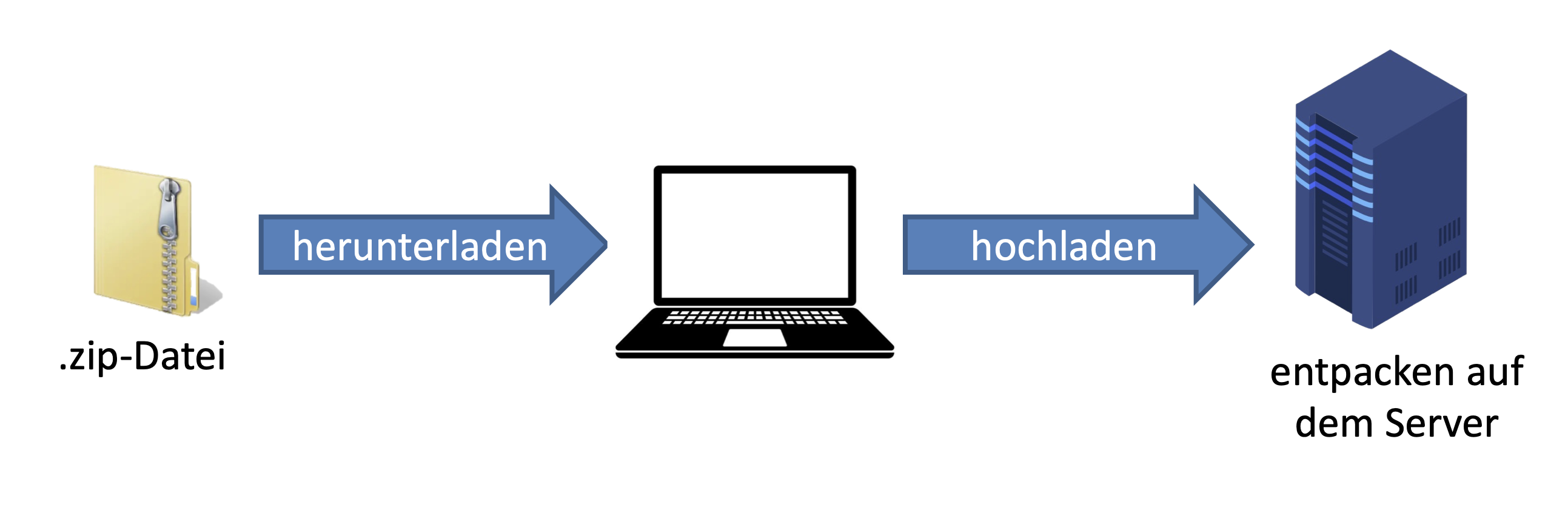
Übung: Dateien komprimieren
Komprimierung mit zwei Unterordnern: Textdatei und Bild
Textdatei eine .txt-Datei mit beliebigem Beispielinhalt
Bild
📁 Textdatei/
📄 text.txt
📁 Bild/
🖼️ foto.jpg
Arten der Datenkompression
Verlustfreie Datenkompression
- Dekodierte Daten unterscheiden sich nicht von den Originaldaten
- Anwendung: Wenn der Verlust einzelner Bits die Qualität wahrnehmbar verändert
- Z.B. Texte, Tabellen, Quellcode
Verlustbehaftete Datenkompression
- Ein Teil der Information geht bei der Kompression verloren
- Anwendung: Qualitative Lücken in der menschlichen Wahrnehmung werden ausgenutzt
- Z.B. Bilder, Audio, Video, Messdaten
Dateiformate — verlustfrei vs. verlustbehaftet
Verlustfrei
Verlustbehaftet
VERLUSTFREIE KOMPRESSION
Verlustfreie Kompression
Forderungen
- Alle Informationen müssen erhalten bleiben
- Informationen möglichst dicht packen
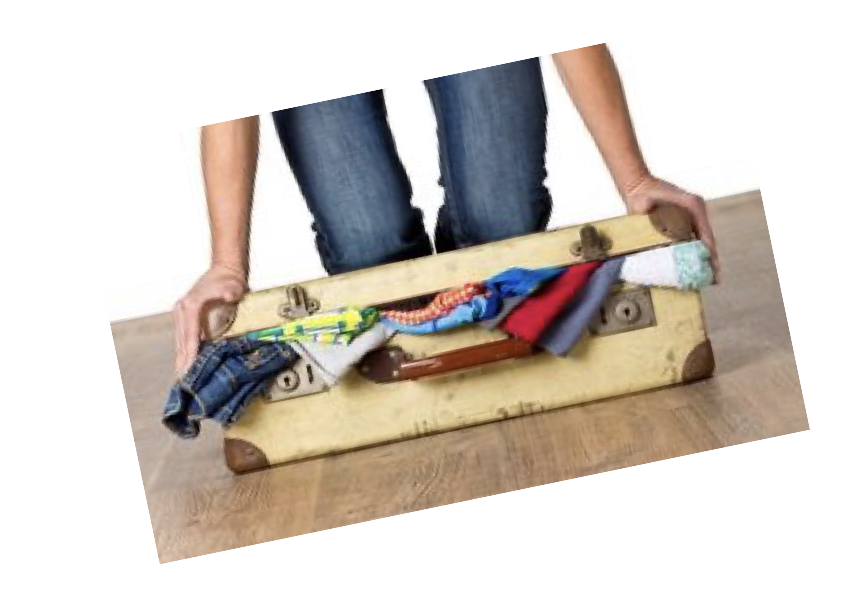
Analogie: Koffer packen
- Alle Gegenstände werden eingepackt
- Möglichst wenig Zwischenraum lassen
- Größe hängt davon ab, welche Arten von Gegenständen eingepackt werden
Ziel: Koffer soll möglichst klein und kompakt gepackt werden
Generelles Ziel: Redundanz reduzieren
Redundanz
- Informationen, die in einer Nachricht mehrfach vorkommen
- Informationen, die ohne Informationsverlust weggelassen werden können
Konkurrierende Ziele:
Komprimierung
Redundanz in den Daten möglichst gering halten
Fehlertoleranz
Redundante Daten unterstützen Fehlererkennung und Fehlerkorrektur
Redundanz am Beispiel von HTML-Code
Zwei Seiten mit sich wiederholenden Inline-Styles — wo ist die Redundanz?
<html>
<body>
  <h1 style="font-family: Arial;
    font-size: 30px; color: red;">
    Wartungsseite</h1>
  <p style="font-family: Arial;
    font-size: 16px; color: black;">
    Diese Homepage wird erstellt</p>
  <h2 style="font-family: Arial;
    font-size: 24px; color: orange;">
    Bitte habe noch etwas Geduld</h2>
</body>
</html><html>
<body>
<h1 style="font-family: Arial;
font-size: 30px; color: blue;">
Kontaktseite</h1>
<p style="font-family: Arial;
font-size: 16px; color: black;">
Feedback? Dann melde dich:</p>
<h2 style="font-family: Arial;
font-size: 24px; color: orange;">
dummy@email.de</h2>
</body>
</html>Lösung: CSS — Redundanz auslagern
CSS-Syntax:
Die wiederholten Styles in eine eigene Datei:
p {
  font-family: Arial;
  font-size: 16px;
  color: black;
}

h1 {
  font-family: Arial;
  font-size: 30px;
  color: red;
}

h2 {
  font-family: Arial;
  font-size: 24px;
  color: orange;
}HTML aufgeräumt + externes Stylesheet
<html>
<head>
  <link rel="stylesheet"
        href="stylesheet.css">
</head>
<body>
  <h1>Wartungsseite</h1>
  <p>Diese Homepage wird erstellt
     von Name</p>
  <h2>Bitte habe noch etwas
     Geduld</h2>
  <p><a href="kontakt.html">
     Kontakt</a></p>
</body>
</html>p {
font-family: Arial;
font-size: 16px;
color: black;
}
h1 {
font-family: Arial;
font-size: 30px;
color: red;
}
h2 {
font-family: Arial;
font-size: 24px;
color: orange;
}Styles nur einmal definiert — gilt für alle HTML-Dateien, die das Stylesheet einbinden.
Aufgabe: CSS auslagern
index.html und kontakt.html in einem Texteditor
stylesheet.css — lagern Sie die wiederholten Styles dorthin aus
<link> in beiden HTML-Dateien
📄 index.html
📄 kontakt.html
📄 stylesheet.css ←
Ansätze zur verlustfreien
Datenkompression
- Codes mit variabel langen Codewörtern
- Morse-Code
- Huffman-Codierung
- Lauflängen-Codierung
- Differenzcodierung
- Arithmetische Codierung
- LZW-Algorithmus
Codes mit variabler Wortlänge
Block-Codes (feste Wortlänge)
- Jedes Zeichen wird mit gleich vielen Bits codiert
- z.B. ASCII-Code: feste Wortlänge von 7 bzw. 8 Bit
Variable Wortlänge
- Häufige Zeichen → kurze Bitfolge
- Seltene Zeichen → lange Bitfolge
- = statistische Datenkompression
Beispiel: Morse-Code
- Zeichen werden durch kurze und lange Symbole dargestellt
- Pausen als drittes Symbol trennen die einzelnen Zeichen
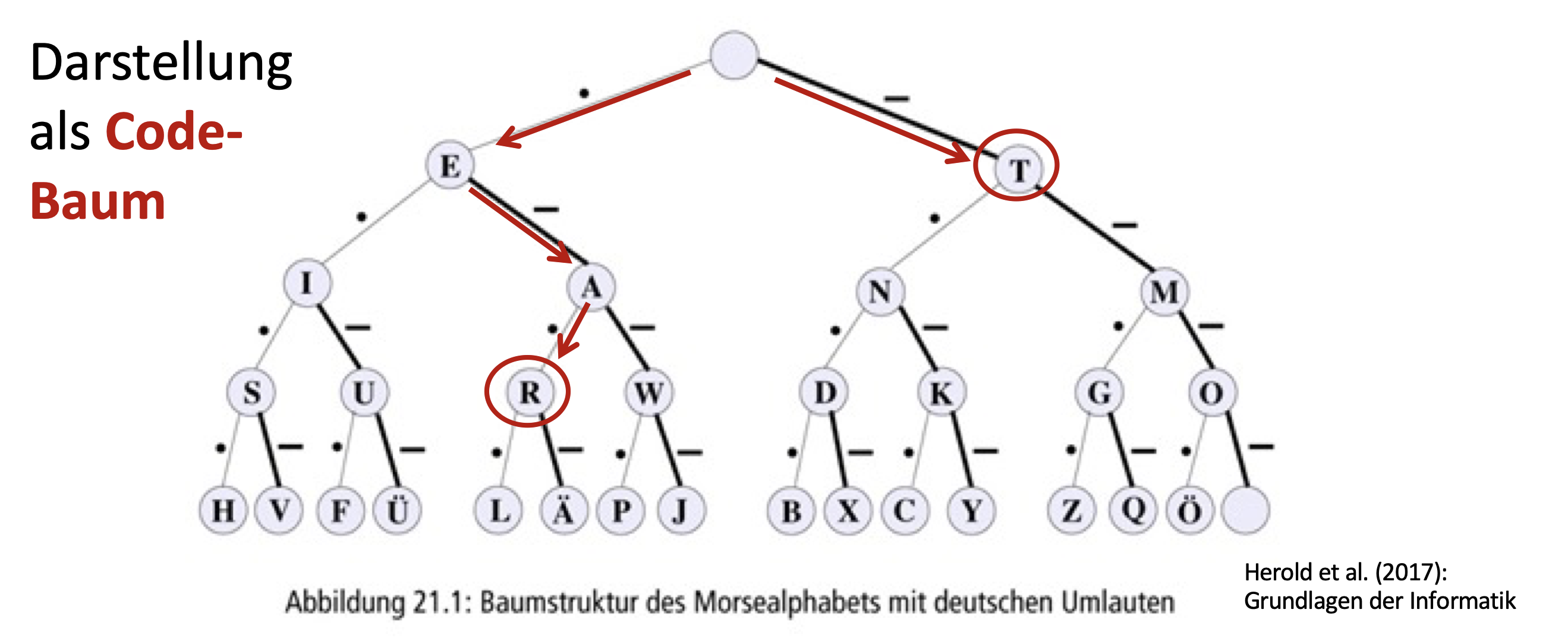
Herold et al. (2017): Grundlagen der Informatik
Fano-Bedingung für die
Dekodierbarkeit eines Codes
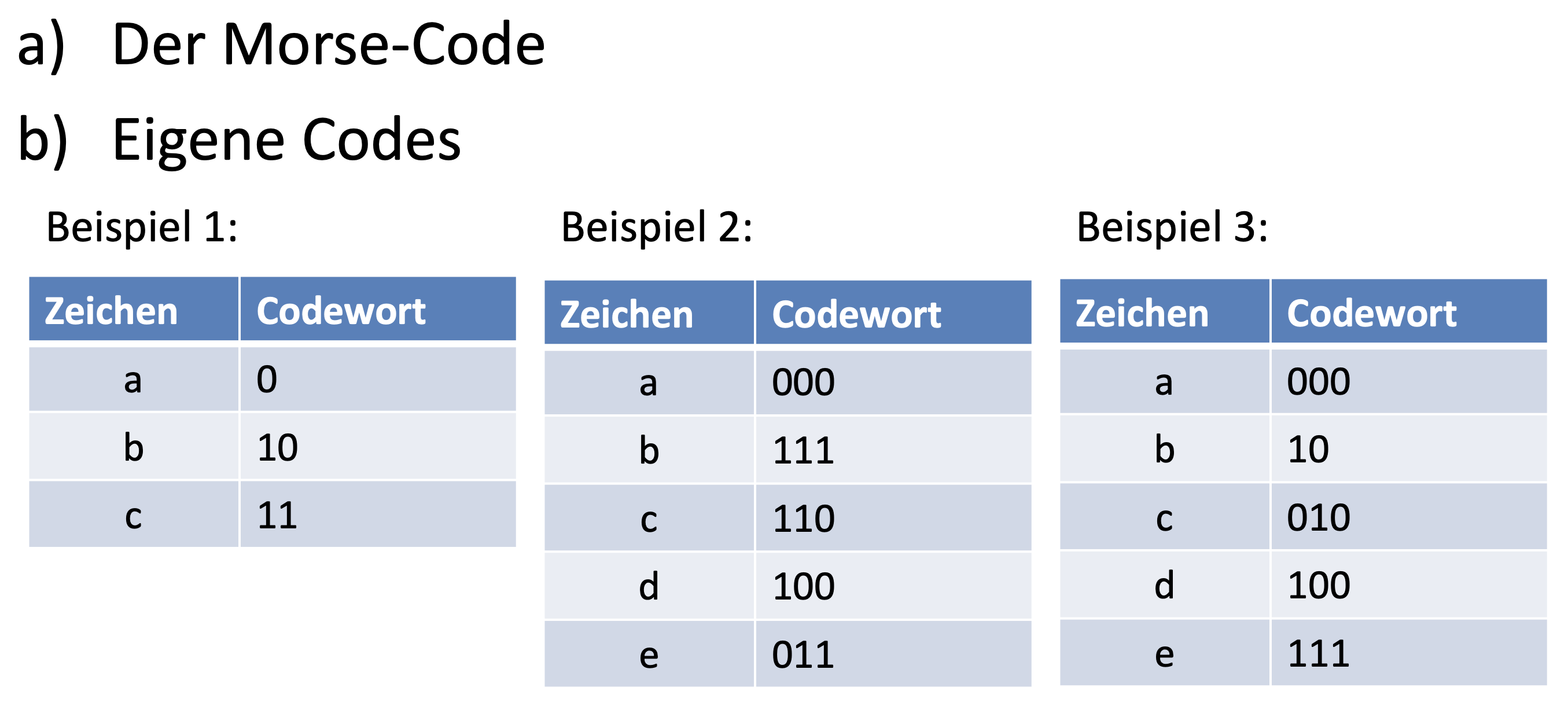
Codes mit variabler Wortlänge müssen für die Dekodierbarkeit folgende Bedingung erfüllen:
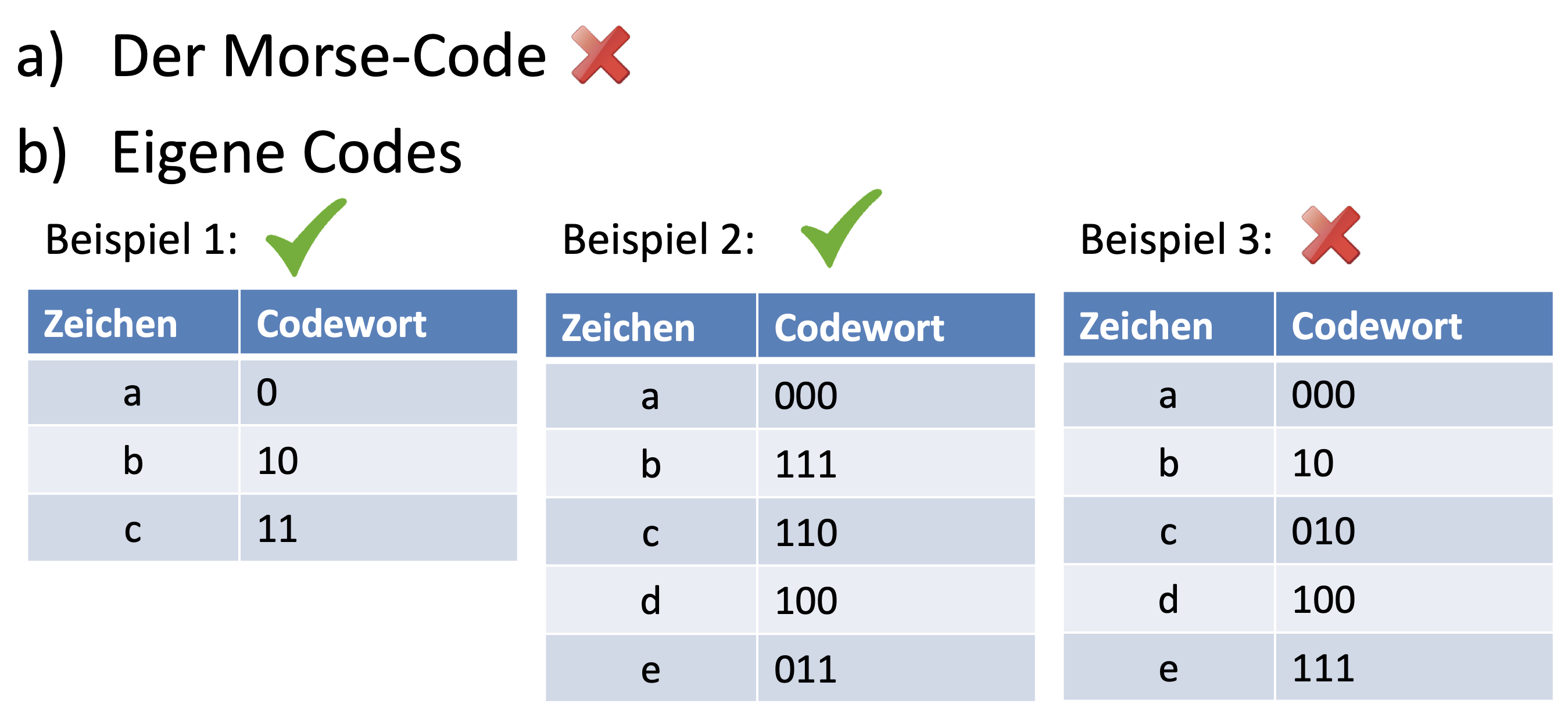
Ein Code erfüllt die Fano-Bedingung, wenn kein Wort aus dem Code der Anfang eines anderen Wortes ist.
Codes, die die Fano-Bedingung erfüllen, nennt man präfixfreie Codes.
Welche Codes erfüllen die
Fano-Bedingung?
Welche Codes erfüllen die
Fano-Bedingung?
Huffman-Algorithmus
- Wurde 1952 von dem amerikanischen Mathematiker A. Huffman entwickelt
- Effektivste Methode, um die Redundanz in einem Code für Einzelzeichen zu minimieren
- Grundidee:
- Die Zeichen eines Texts, die häufig auftreten, werden in kurzen Codewörtern codiert.
- Der Code ist präfixfrei (s. Fano-Bedingung)
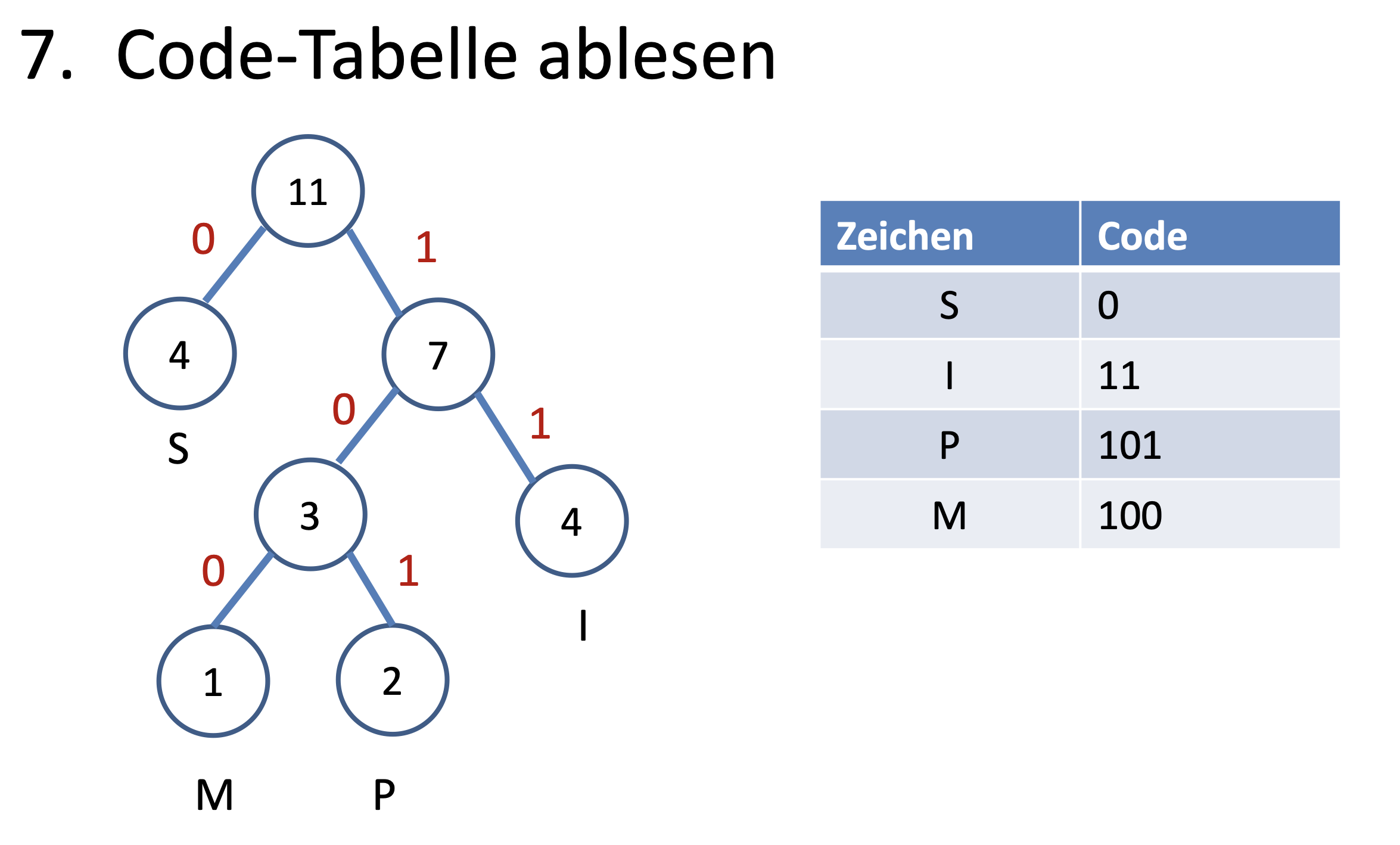
- Der Code wird über einen Code-Baum erzeugt
Vorgehensweise: Schritt 1 + 2
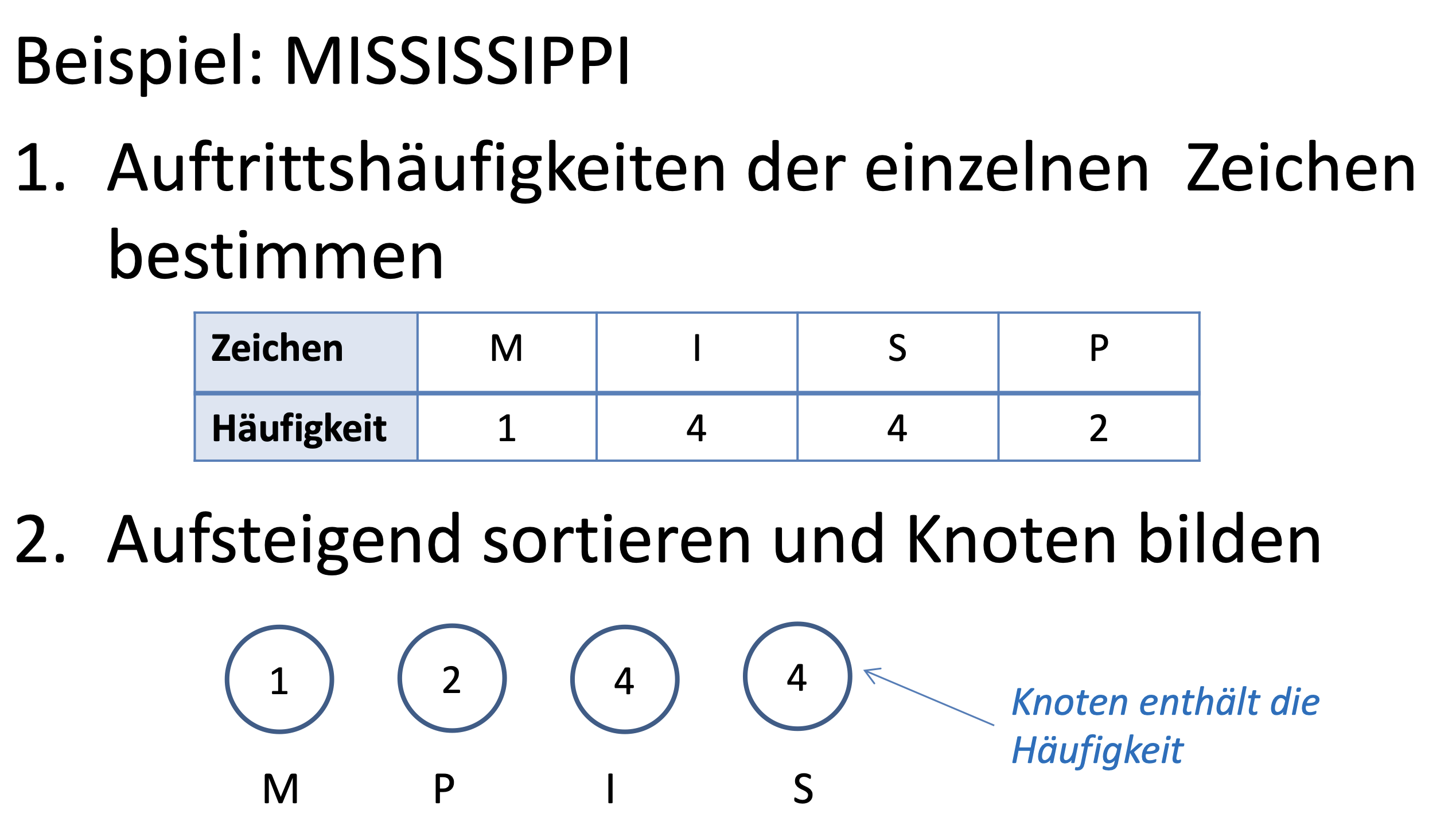
Vorgehensweise: Schritt 3
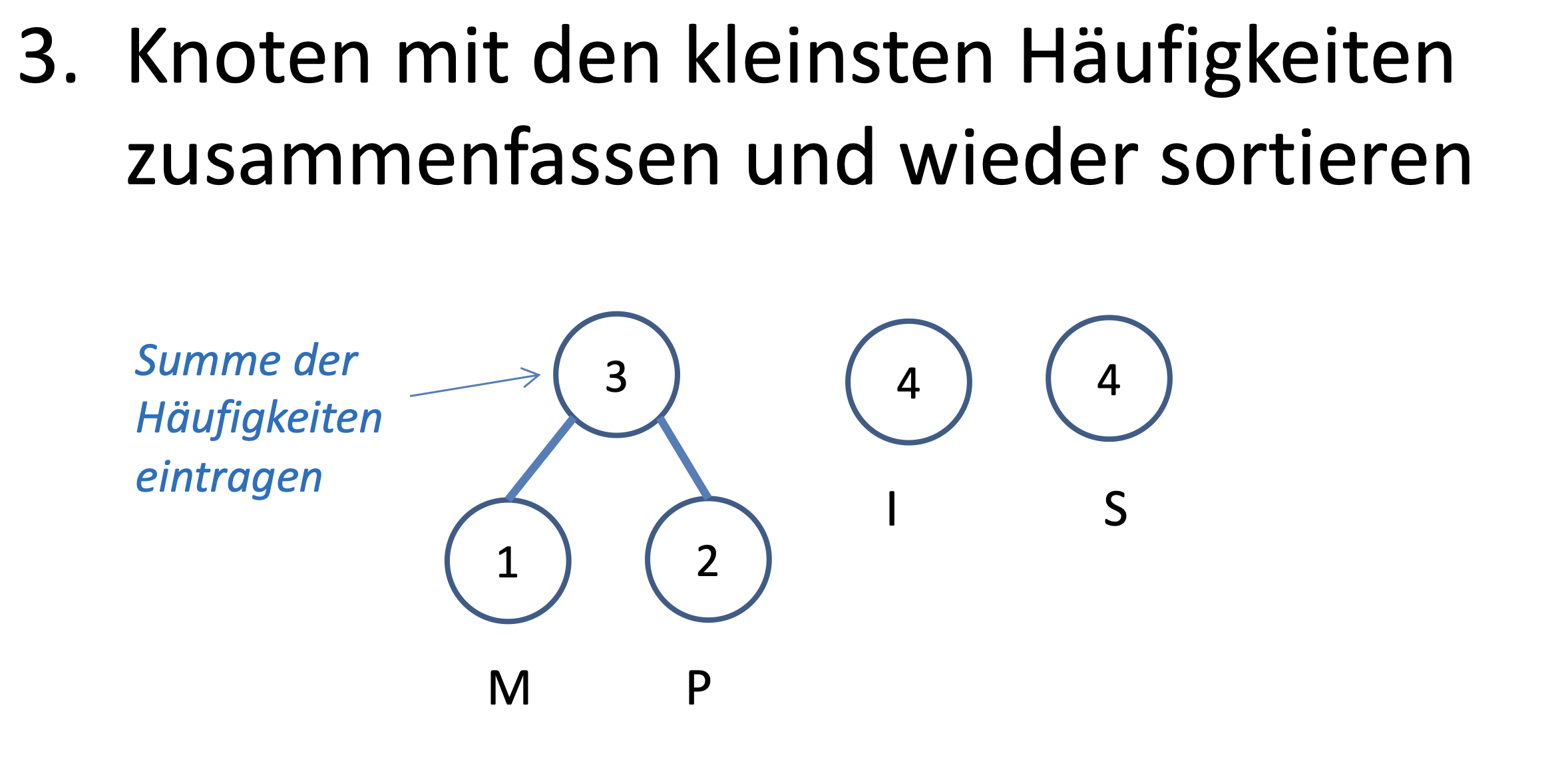
Vorgehensweise: Schritt 4
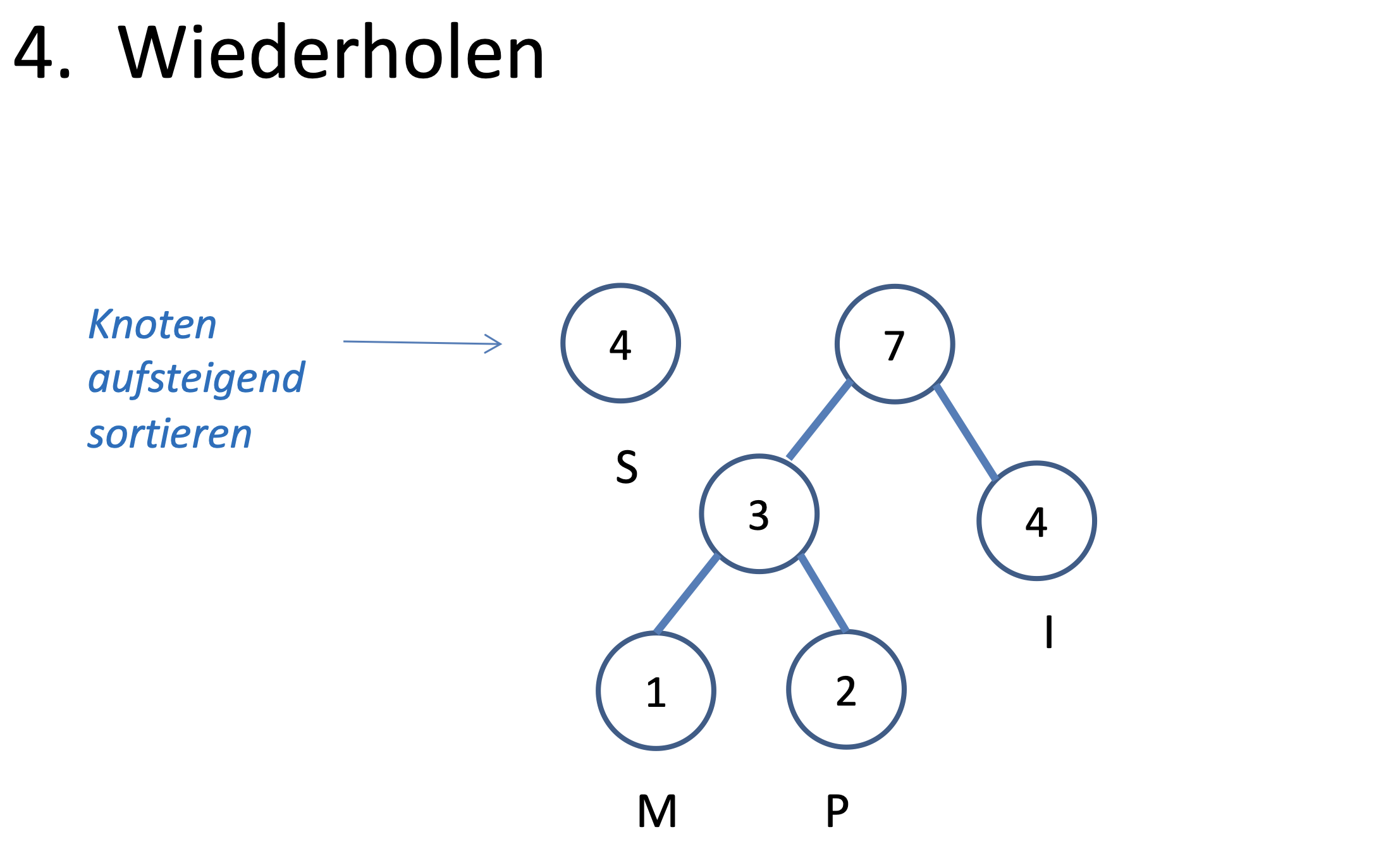
Vorgehensweise: Schritt 5
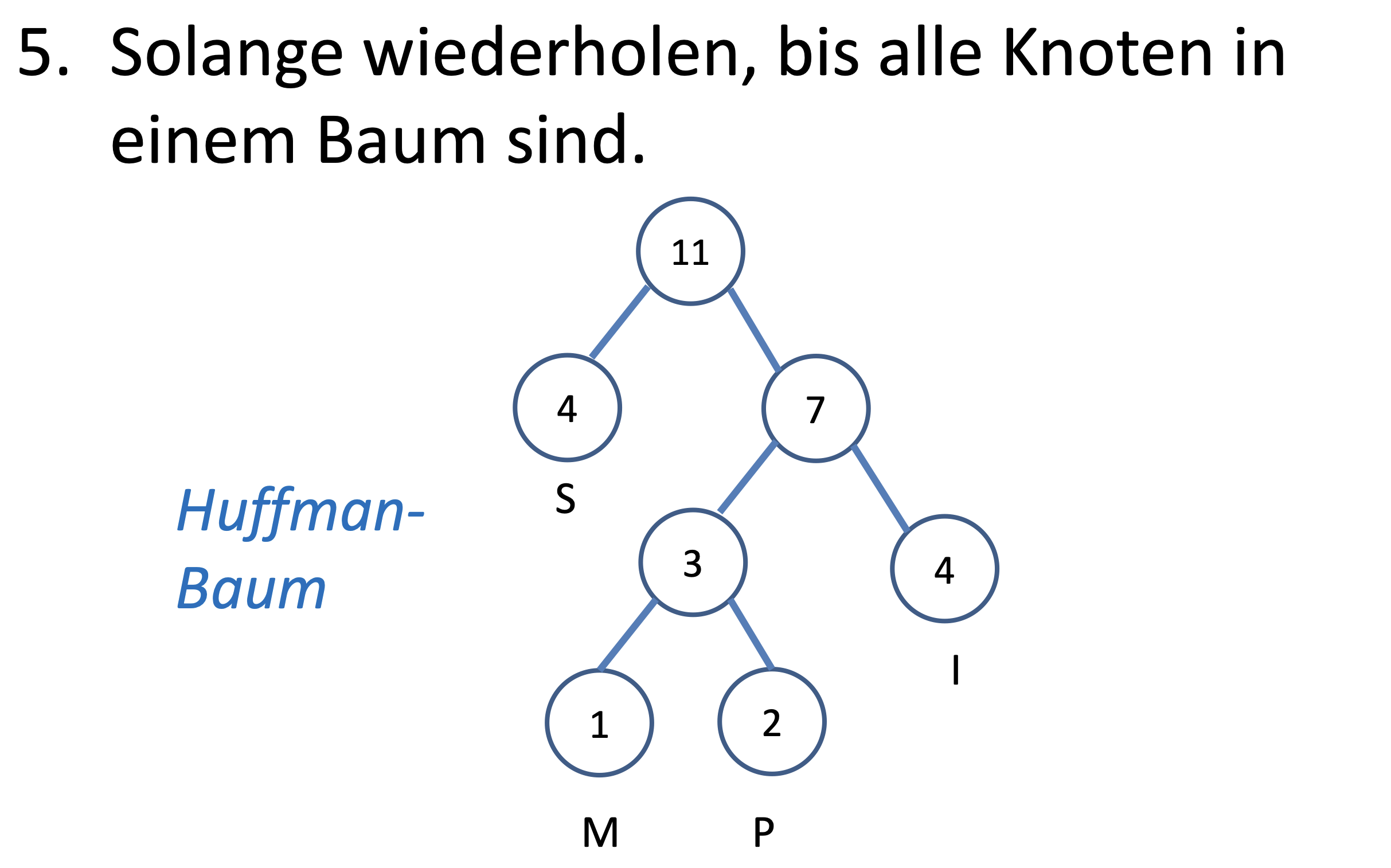
Vorgehensweise: Schritt 6
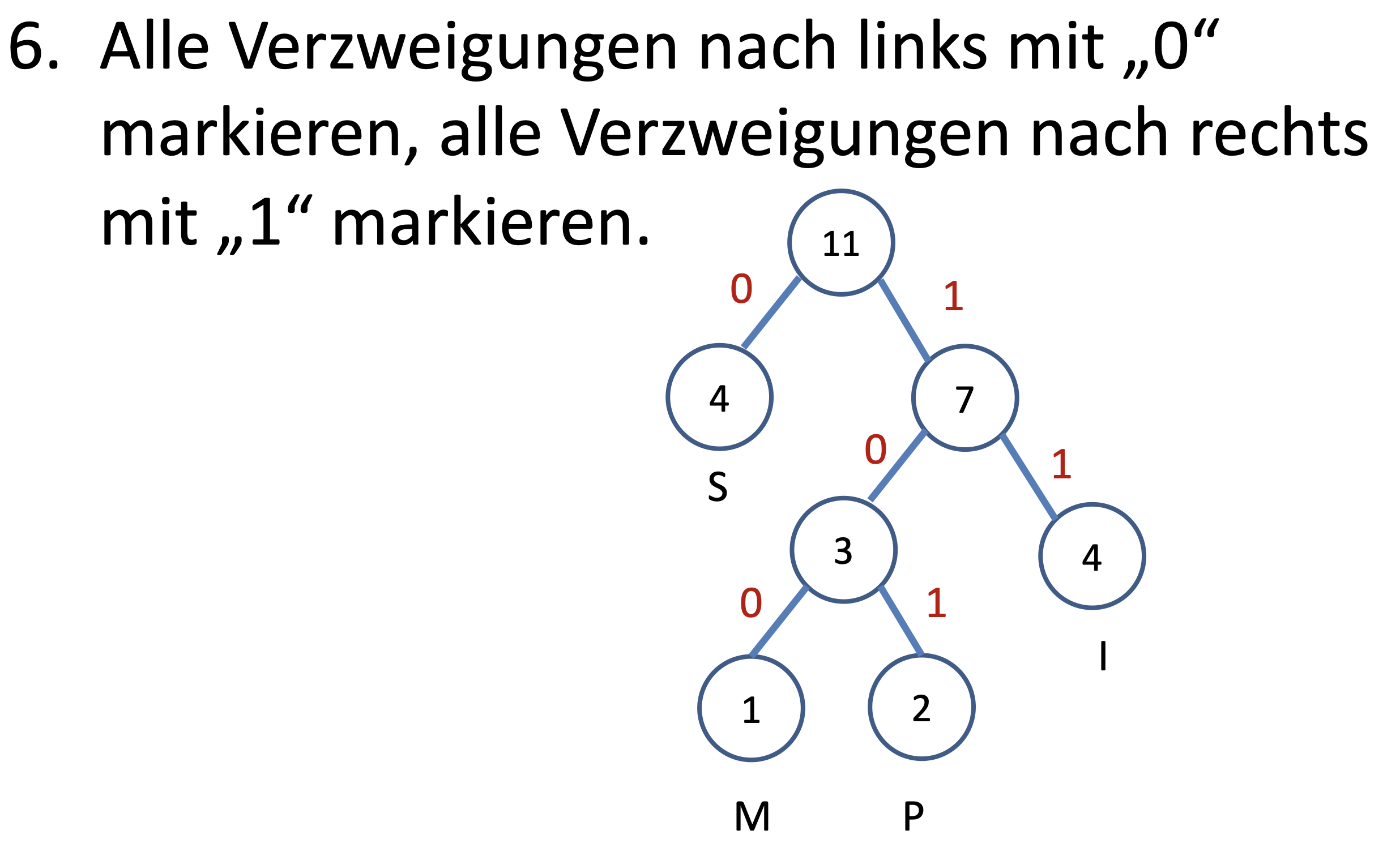
Vorgehensweise: Schritt 7
Vorgehensweise: Schritt 8
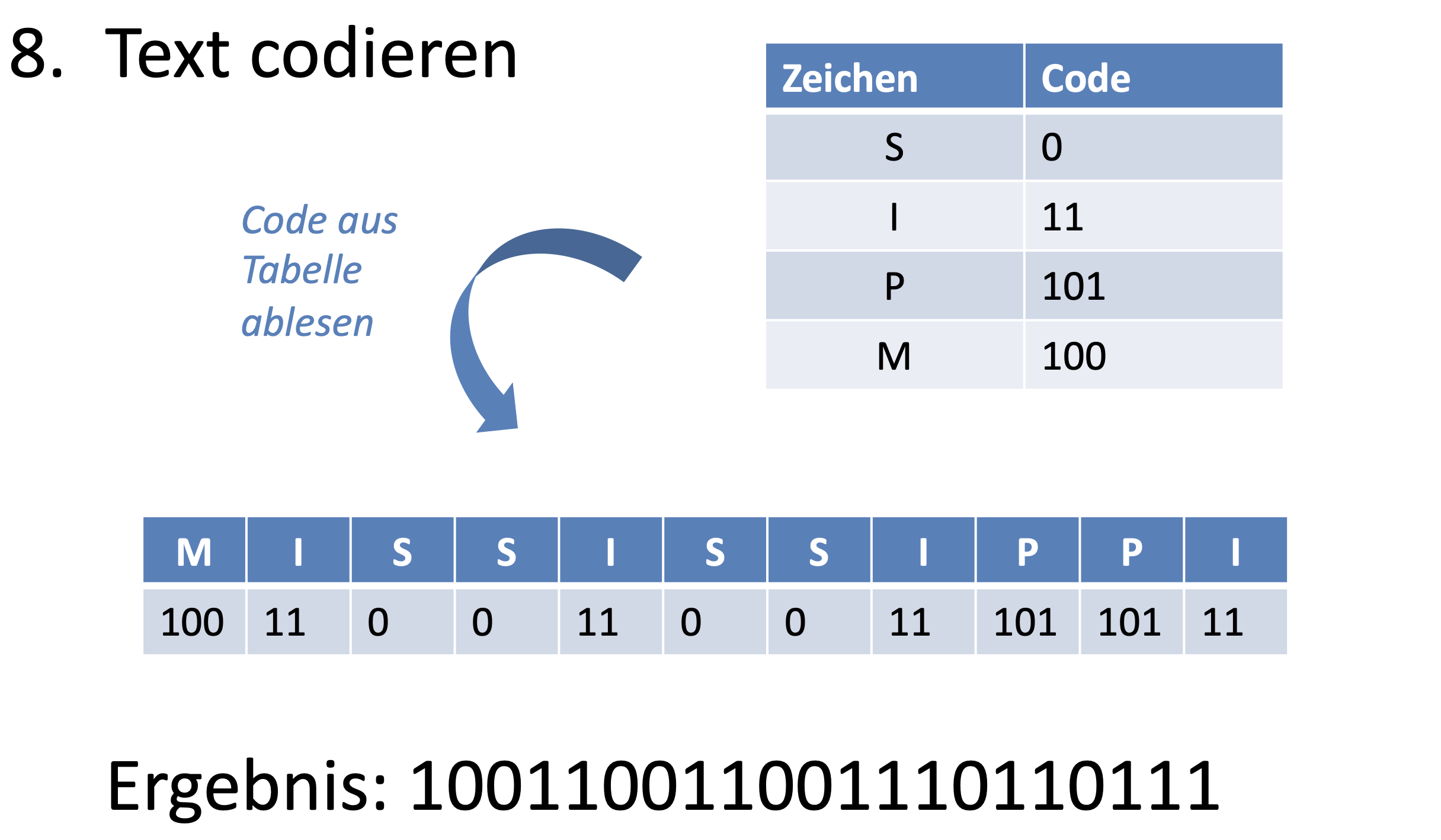
Vergleich: Huffman vs. ASCII-Code
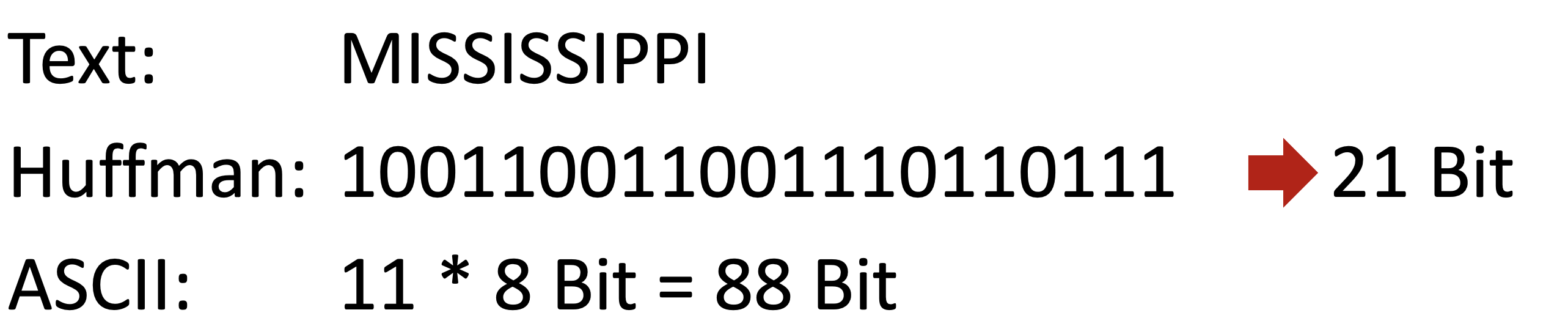
Allgemein benötigen Huffman-codierte Texte ca. 2/3 des Speicherplatzes im Vergleich zur ASCII-Codierung.
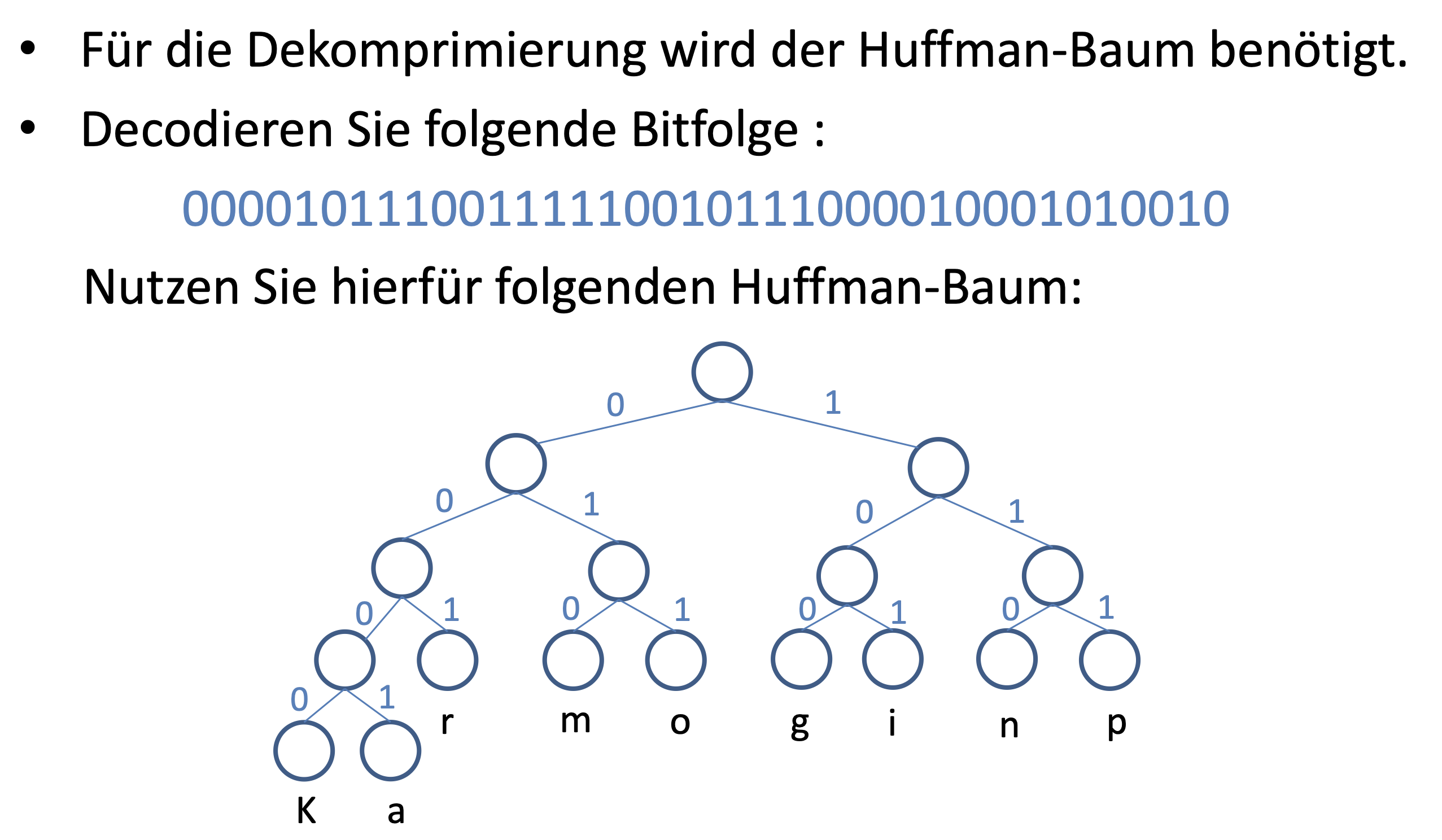
Aufgabe: Dekomprimierung
Ist Komprimierung eine fundamentale Idee?
Überprüfung anhand der vier Kriterien (Schwill, 1993):
Horizontalkriterium
Komprimierung findet sich in Texten, Bildern, Audio, Video, Archiven, Datenbanken, Netzwerkprotokollen …
Vertikalkriterium
Von der Grundschule (ZIP-Dateien) bis zur Forschung (Informationstheorie, Shannon)
Zeitkriterium
Von Morse (1837) über Huffman (1952) bis heute (H.265, AVIF) — bleibt relevant
Sinnkriterium
Effizienz & Platzersparnis — im Alltag verankert (Streaming, Messenger, Cloud-Speicher)
Fragen?
Sitzungsreflexion
franke-lab.de/lehre/sose/fundidee/reflexion.html?sitzung=4
Artefakte & Reflexion verfassen → HTML kopieren → in Mahara einfügen
To Do's:
- e-Portfolio aktualisieren (Reflexion Sitzung 4)
- Übungsaufgaben fertigstellen